Wenn Pädagogen Mind Mapping nutzen, um komplexes Wissen verständlich zu machen

Dr. Li Na lehrt im MSc-Programm Digital Education. Ein Großteil ihrer Arbeit konzentriert sich darauf, zukünftige Lehrkräfte darauf vorzubereiten, Lernen in komplexen, technologieintensiven Umgebungen zu gestalten.
Im Laufe der Jahre beschäftigte sie ein Thema immer wieder. Studierende gaben ihre Arbeiten pünktlich ab. Präsentationen wirkten ausgefeilt. Aber wenn sie verstehen wollte, wie Studierende tatsächlich dachten, waren die Antworten oft unklar.
Die Herausforderung, zu sehen, was Studierende wirklich verstehen
In Li Nas Kursen bearbeiten Studierende Aufgaben, die strukturiertes Denken erfordern. Sie entwerfen Kurse, analysieren wissenschaftliche Literatur und präsentieren Forschungsideen. Auf dem Papier sahen die Ergebnisse oft gut aus.
Doch als sie diese Aufgaben überprüfte, bemerkte Li Na ein Muster, das sie nicht ignorieren konnte.
Im Kern lag die Herausforderung darin, dass:
schriftliche Berichte Schlussfolgerungen zeigten, aber keine Logik
PowerPoint-Folien Ideen auf einzelne Folien aufteilten
es schwierig war zu erkennen, wie Argumente aufgebaut wurden
Unklarheiten schwer zu identifizieren waren
Besonders frustrierend war das bei literaturbasierten Aufgaben. Nach dem Lesen langer Zusammenfassungen oder dem Zuhören bei Präsentationen konnte sie immer noch nicht erkennen, ob Studierende die Struktur eines Textes verstanden hatten oder lediglich wichtige Punkte wiederholten.
Irgendwann merkte sie, dass sich etwas falsch anfühlte. Sie bewertete Ergebnisse, ohne den Denkprozess dahinter wirklich zu sehen.
Xmind nutzen, um das Denken der Studierenden sichtbar zu machen
Der Wendepunkt kam bei einer Lektüreaufgabe.
Statt einer weiteren schriftlichen Arbeit bat Li Na die Studierenden, eine mind map einzureichen, die zeigte, wie sie den Artikel verstanden hatten. Als sie die ersten Einsendungen öffnete, fiel ihr sofort etwas auf.
Auf einen Blick konnte sie sehen:
wie jede und jeder den Text gegliedert hatte
welche Argumente miteinander verbunden wurden
welche Ideen priorisiert wurden
wo die Struktur zu bröckeln begann
Was sie vor sich hatte, war keine fertige Antwort, sondern eine visuelle Spur des Denkens jedes einzelnen Studierenden.
Hier sind einige Beispiele von Studierendenarbeiten, die mit mind maps erstellt wurden.
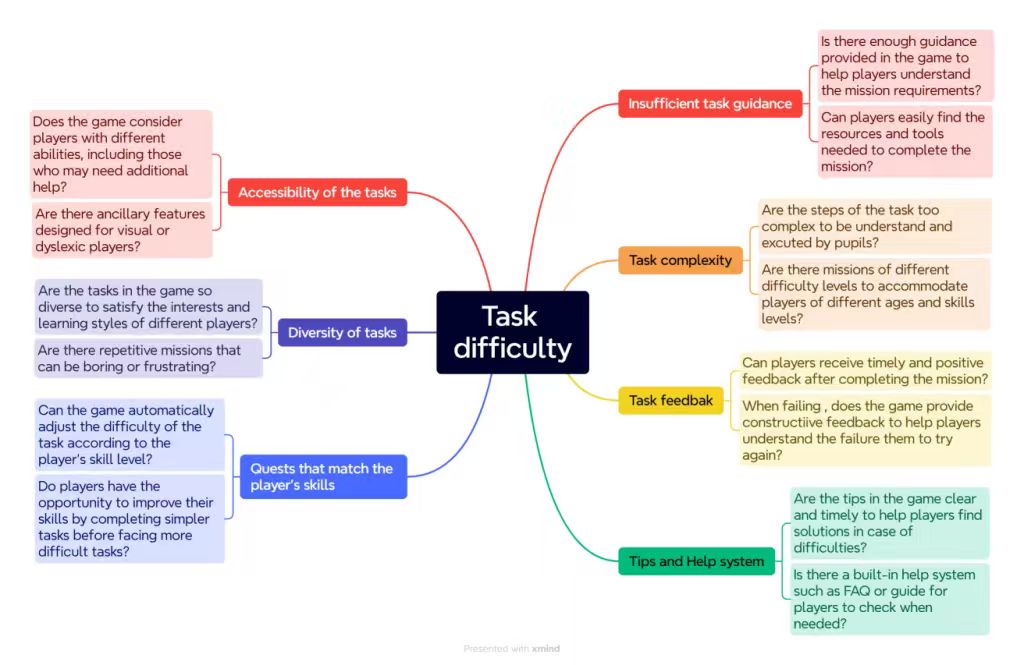
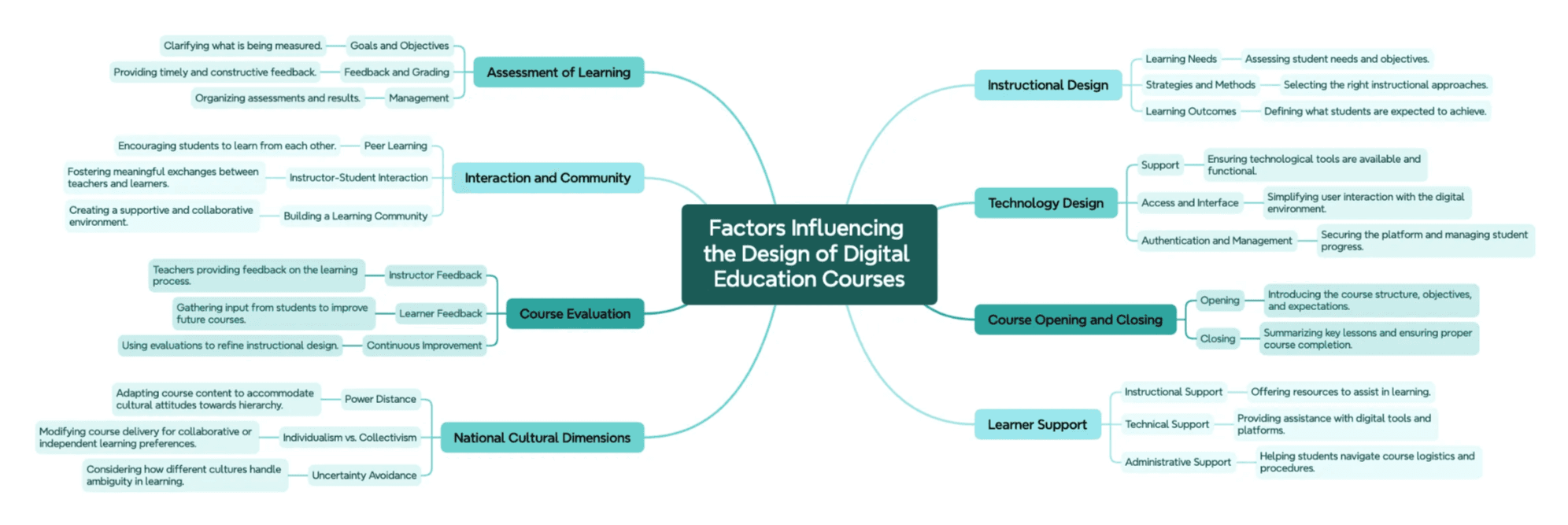
Dieser Moment veränderte ihren Unterrichtsansatz. Sie führte Xmind gezielter ein, nicht als Präsentationstool, sondern als Möglichkeit für Studierende, ihr Denken nach außen zu tragen.
Studierende begannen, mind maps zu nutzen, um:
Lesetexte zu analysieren
Kurse zu entwerfen
Präsentationen vorzubereiten
Das Bewerten von Aufgaben fühlte sich nicht länger wie ein Entschlüsseln an. Die Struktur war einfach da.
Wie Studierende ihre Ideen anders vorbereiten und präsentieren
Li Na hatte auch eine klare Sicht auf traditionelle Präsentationen. Ihrer Erfahrung nach ermutigte PowerPoint Studierende, rückwärts zu arbeiten. Sie konzentrierten sich am Ende auf Folien, nicht zu Beginn auf die Struktur.
Mit Xmind änderte sich diese Reihenfolge.
Studierende:
beginnen mit dem Visualisieren von Ideen, bevor sie sich um die Präsentation kümmern
präsentieren direkt aus ihren mind maps mit Pitch Mode
erklären Ideen anhand der Struktur statt anhand der Folienreihenfolge
Li Na bemerkte einen praktischen Unterschied. Studierende bereiteten sich früher vor. In den Diskussionen stand stärker der Zusammenhang zwischen Ideen im Mittelpunkt. Statt zu fragen: „Was kommt als Nächstes auf die Folie?“, erklärten die Studierenden, warum Ideen zusammengehörten.
Was sich geändert hat und warum es für sie wichtig war
Im Laufe der Zeit veränderte sich auch Li Nas Rolle bei der Bewertung. Statt zwischen den Zeilen lesen zu müssen, konnte sie das Denken der Studierenden direkt sehen. In manchen Fällen sagte ihr ein Blick auf eine mind map mehr als ein ganzer schriftlicher Bericht.
Am meisten überraschte sie, was außerhalb des Klassenzimmers passierte. Manche Studierende nutzten Xmind auch eigenständig, in anderen Kursen und in Gruppendiskussionen. Andere verwendeten es, um ihr Lernen in digitale Portfolios oder Website-Strukturen zu organisieren. Das Tool wurde Teil ihrer Denkweise, nicht nur ihrer Abgaben.
Auf die Frage, Xmind mit einem Wort zu beschreiben, wählte Li Na kreatives Denken. Für sie war Kreativität schon immer ein schwieriger Begriff. Sie glaubt nicht, dass man sie durch Anweisungen oder Formeln lehren kann. Sie ist seit Langem eine der unbeantworteten Fragen in der Bildung.
Xmind löste diese Frage nicht. Aber es bot ihr etwas, wonach sie gesucht hatte: einen Weg, Denken sichtbar zu machen und so Raum zu schaffen, in dem Kreativität entstehen kann.
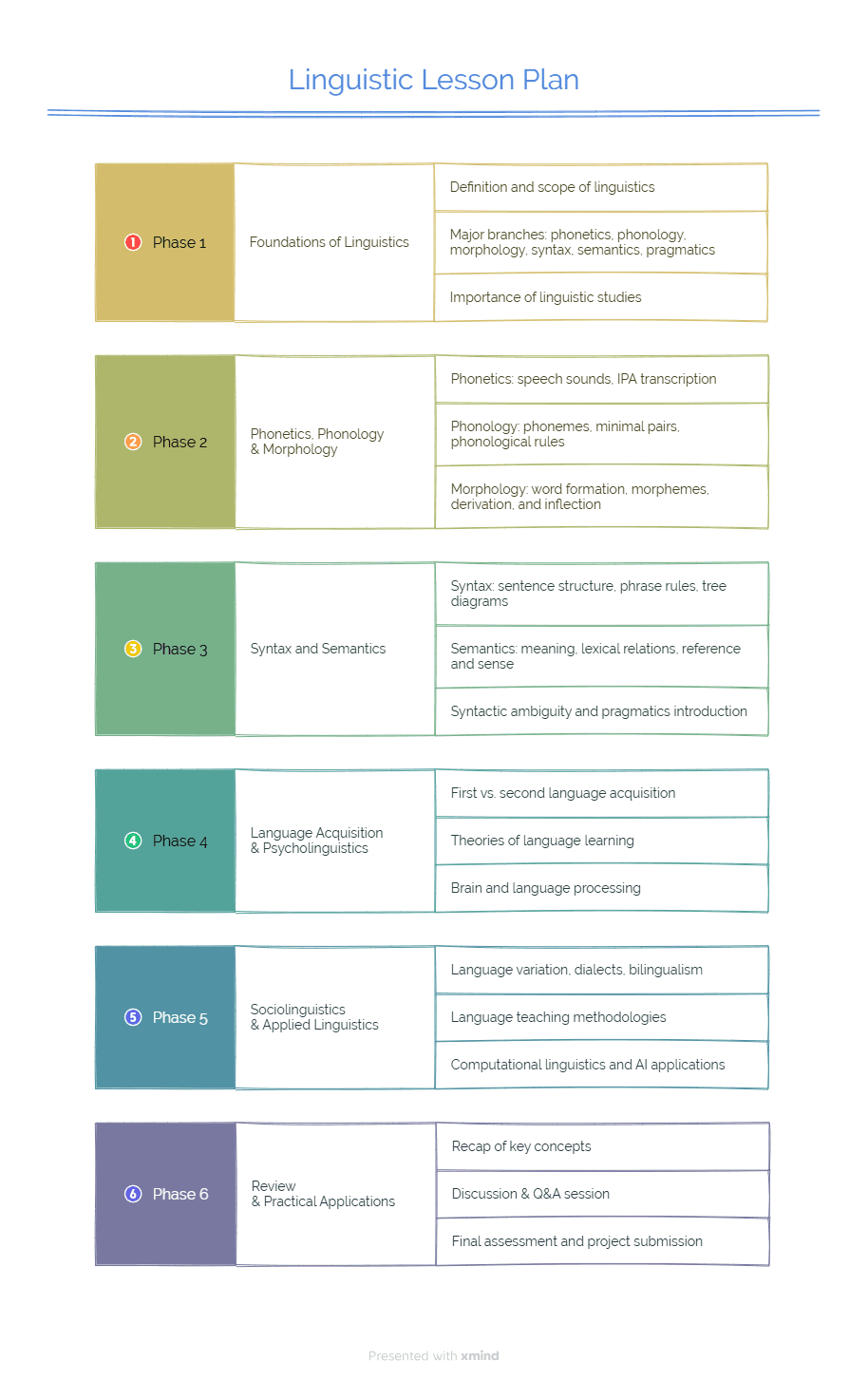
Weitere Vorlagen für Lehrkräfte entdecken
Unterrichtsplan für Linguistik
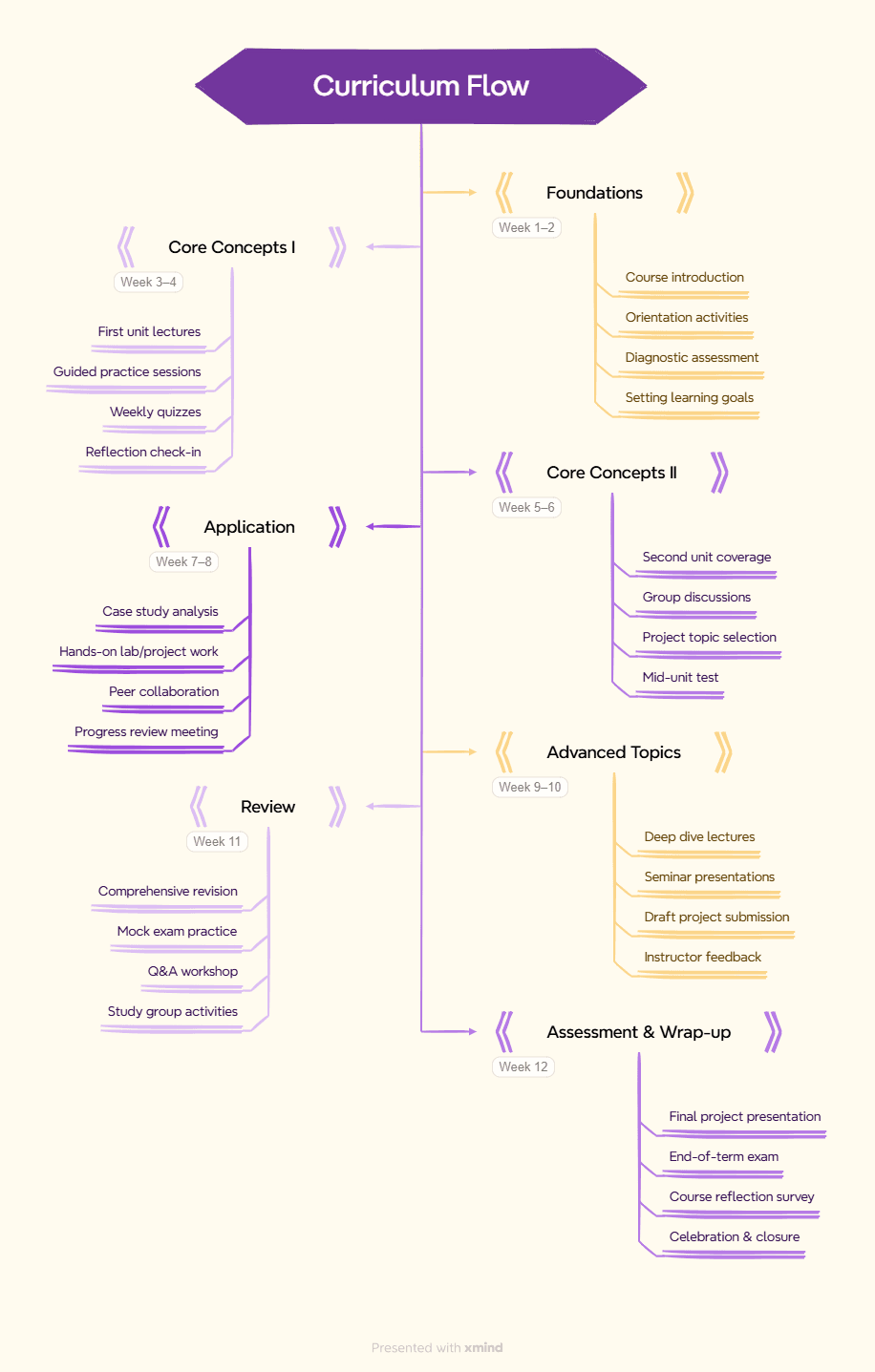
Curriculum-Ablauf