Finding clarity in complex HR work—Amelia’s experience with Xmind

hannah

Amelia works in HR at Otsuka Chemical (Shanghai) Co., Ltd.. Her responsibilities include recruitment, training, and employee relations. On most days, the work follows familiar routines. The real pressure comes at predictable business moments—performance review cycles, cross-department meetings, and management reporting.
These are not occasional tasks. They repeat every year, every quarter, sometimes every month.
The moment HR work turns heavy
During performance review periods, reports arrive almost at the same time. Each team submits its work in a different format. Some write long Word documents. Others prepare slides that look polished but are hard to follow.
Amelia noticed that the problem was not missing information. It was what happened after the reports were submitted. Reading each one was manageable. Reviewing them together was not.
What made this stage especially heavy was that:
Questions in meetings often circled back to the same points
Follow-up emails kept coming, asking for clarification
Teams had to explain their logic again, even after reporting
What surprised her was how much time was spent after the reporting itself—not on decisions, but on rewriting summaries, re-explaining logic, and aligning understanding across teams.
One format shift, many small changes
The shift began during one performance review cycle, when management encouraged teams to try mind maps for reporting. Several tools were tested in a short time. With Xmind, most people could start immediately, without needing detailed instructions.
Instead of taking meeting notes in Word and rewriting them afterward, Amelia began placing key points directly into a map as the discussion unfolded. Instead of trying to capture everything, she focused on structure and relationships.
The difference became clear after one review meeting. When the discussion ended, she paused, expecting the usual next step—rewriting notes, preparing summaries, and getting ready for follow-up explanations. It did not happen. The map on the screen already showed what had been decided and what still needed attention.
What the map already showed:
What had been decided
What was still pending
How different points were connected
In the next discussion, no one asked her to clarify where information was written. People pointed to the same part of the map and moved forward. That was the moment Amelia realized the change was not about recording meetings more efficiently, but about reducing the need to explain them afterward.
How the change showed up across teams
This change did not replace existing HR systems. Routine tasks stayed where they were. The difference appeared in high-impact scenarios.
Sales teams, for example, used to spend significant time adjusting PPT layouts before reporting. Now, instead of fixing fonts and alignment, they focused on content and logic. With Pitch Mode, presentations could be delivered directly from structured maps.
For managers, reports became easier to read side by side. For teams, expectations were clearer earlier in the process. For Amelia, the most noticeable change was quieter—fewer follow-up explanations after meetings, fewer documents rewritten just to make work understandable.
The change Xmind brought into her work
At first, Xmind was simply a reporting tool. Later, while preparing materials for an internal sharing session, Amelia explored how others were using it. What surprised her was how familiar the pattern felt across different scenarios.
Now, when she prepares a training session, she no longer starts with slides. She opens a map and builds the session structure as topics emerge.
This shift changes how sessions unfold:
Participants can see how discussions connect in real time
Questions are placed within the same structure
The map becomes a shared reference after the session
For Amelia, HR work has always involved a long-term challenge: making work visible without making it heavier. The change Xmind brought was not about adding a new step, but about simplifying. When structure appears early, understanding no longer needs to be chased afterward.
Explore more templates for hr
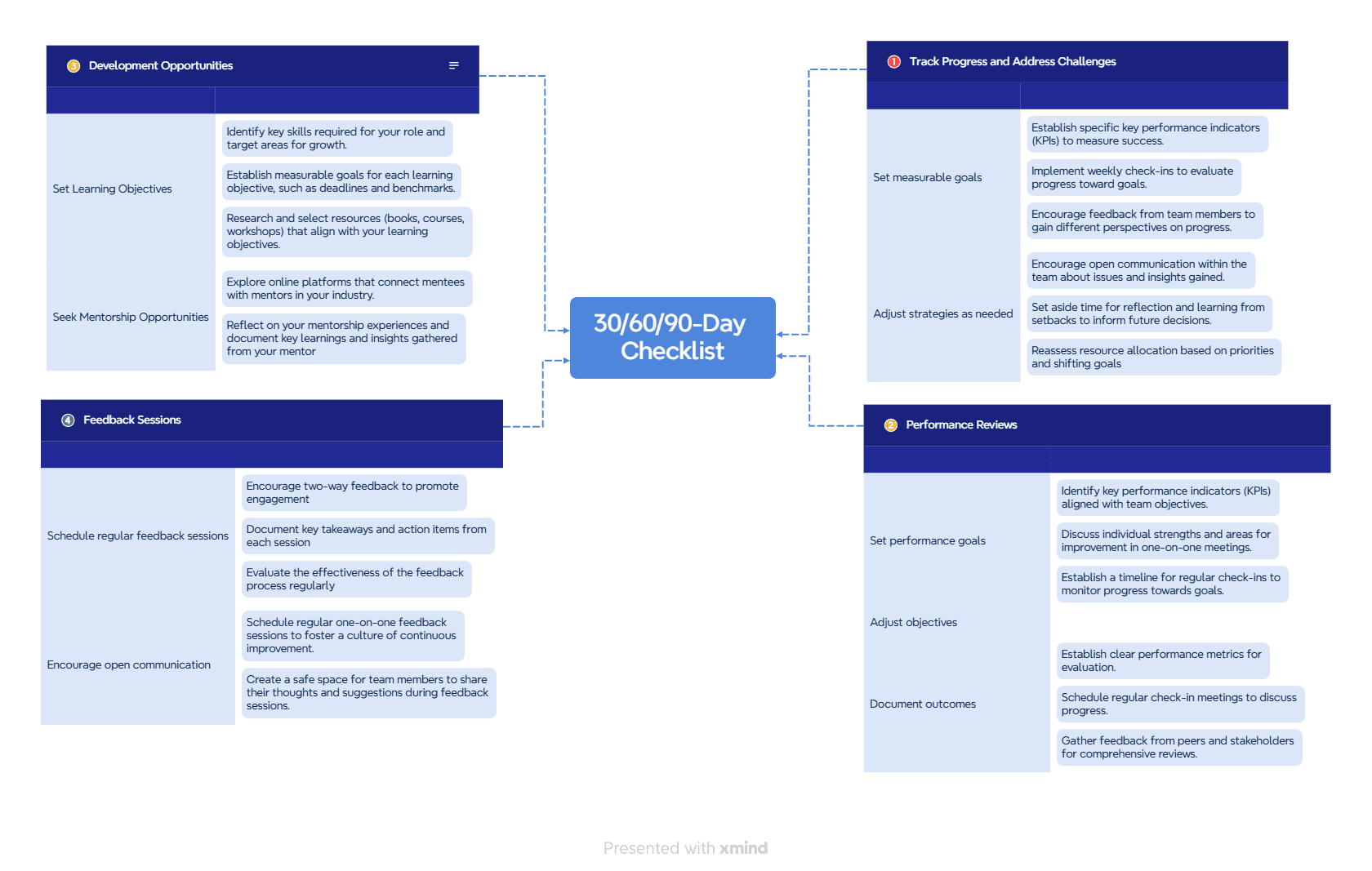
Onboarding Checklist
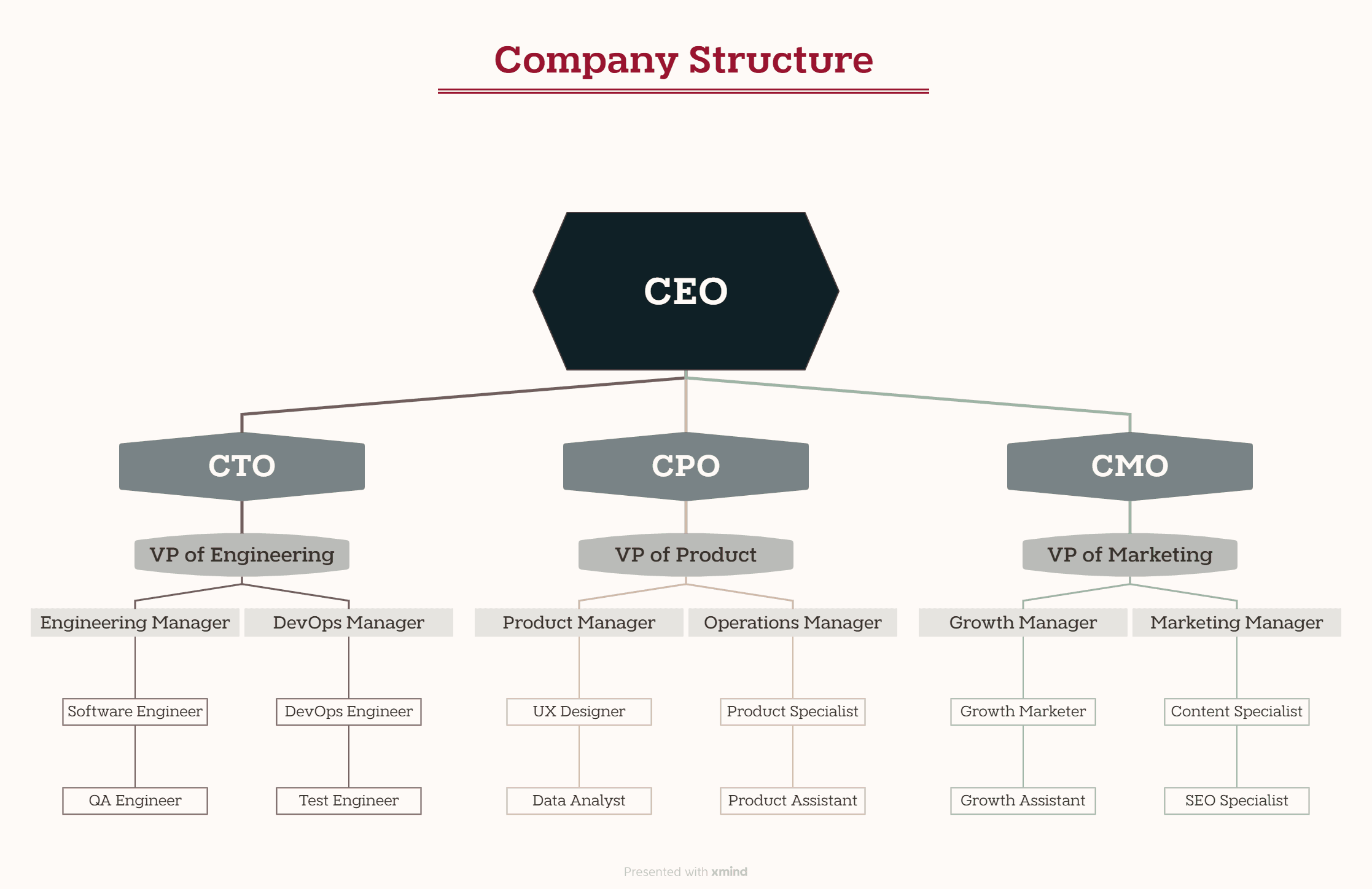
Org Chart